



 Italiano
PAST EXHIBITION



Between macchia and impression.
Zandomeneghi, Degas and the birth of the modern gaze.

When
27 February 2026
28 June 2026

Contact center
0425 460093
info@palazzoroverella.com
Two paths, one decisive meeting
The story of Federico Zandomeneghi and Edgar Degas stems from similar educational experiences and culminates in a human and artistic encounter that would profoundly mark the paths of both men. While Florence represented a decisive step for both of them—Degas studied the Renaissance tradition there and frequented the Caffè Michelangiolo, while Zandomeneghi grew up alongside the Macchiaioli, learning a style of painting based on direct observation and natural light—it was in Paris that their paths truly crossed.
Here, an intense friendship and continuous dialogue took shape: Degas became a point of reference and mentor for the Venetian artist, while Zandomeneghi reworked Impressionist stimuli according to his personal sensibility, nourished by Italian chromatic memory. The exhibition reconstructs this exchange of affinities, references, and mutual influences, highlighting how two different paths converge in a common focus on contemporary life and contribute, together, to renewing the language of European art.
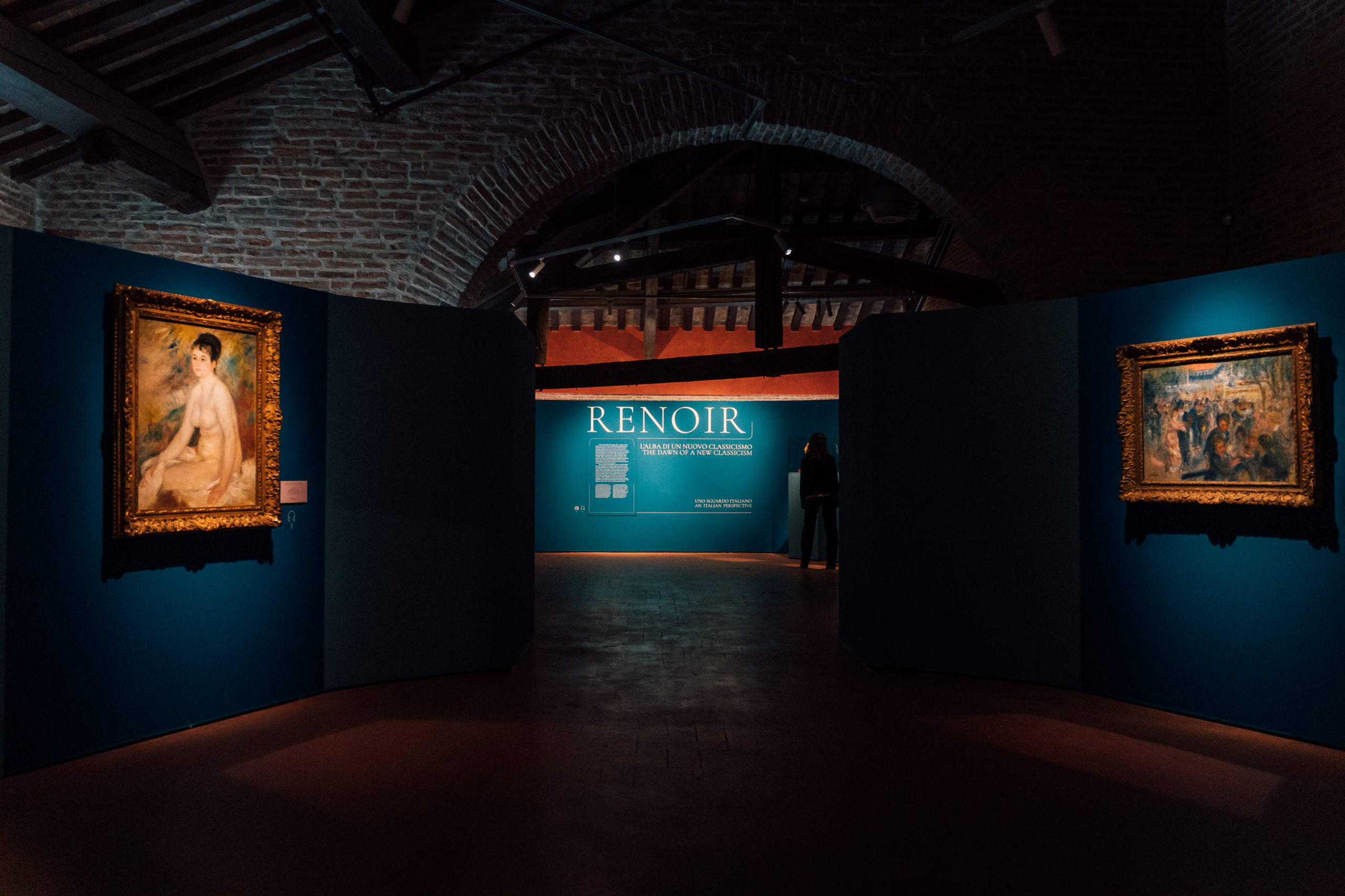
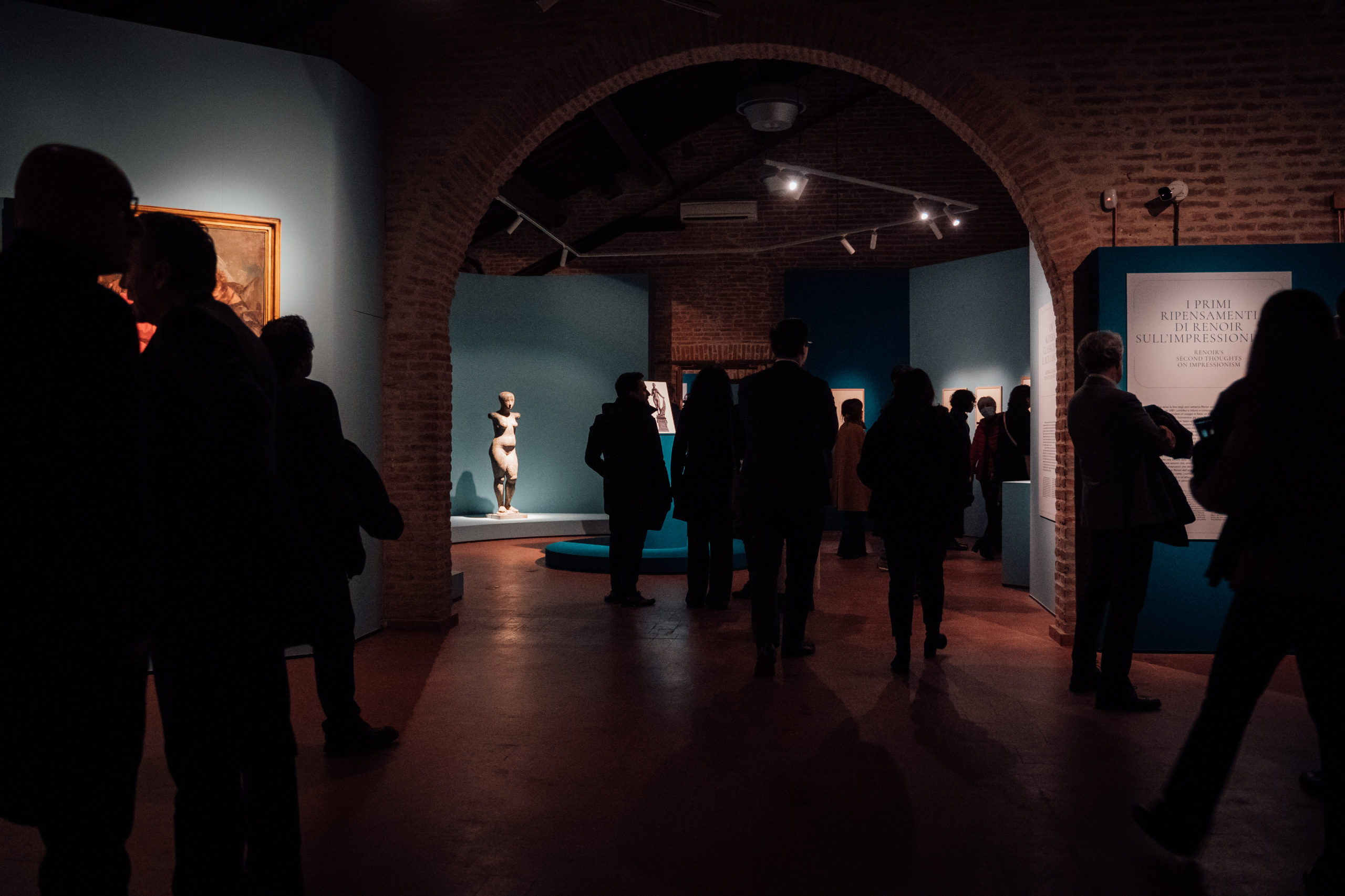
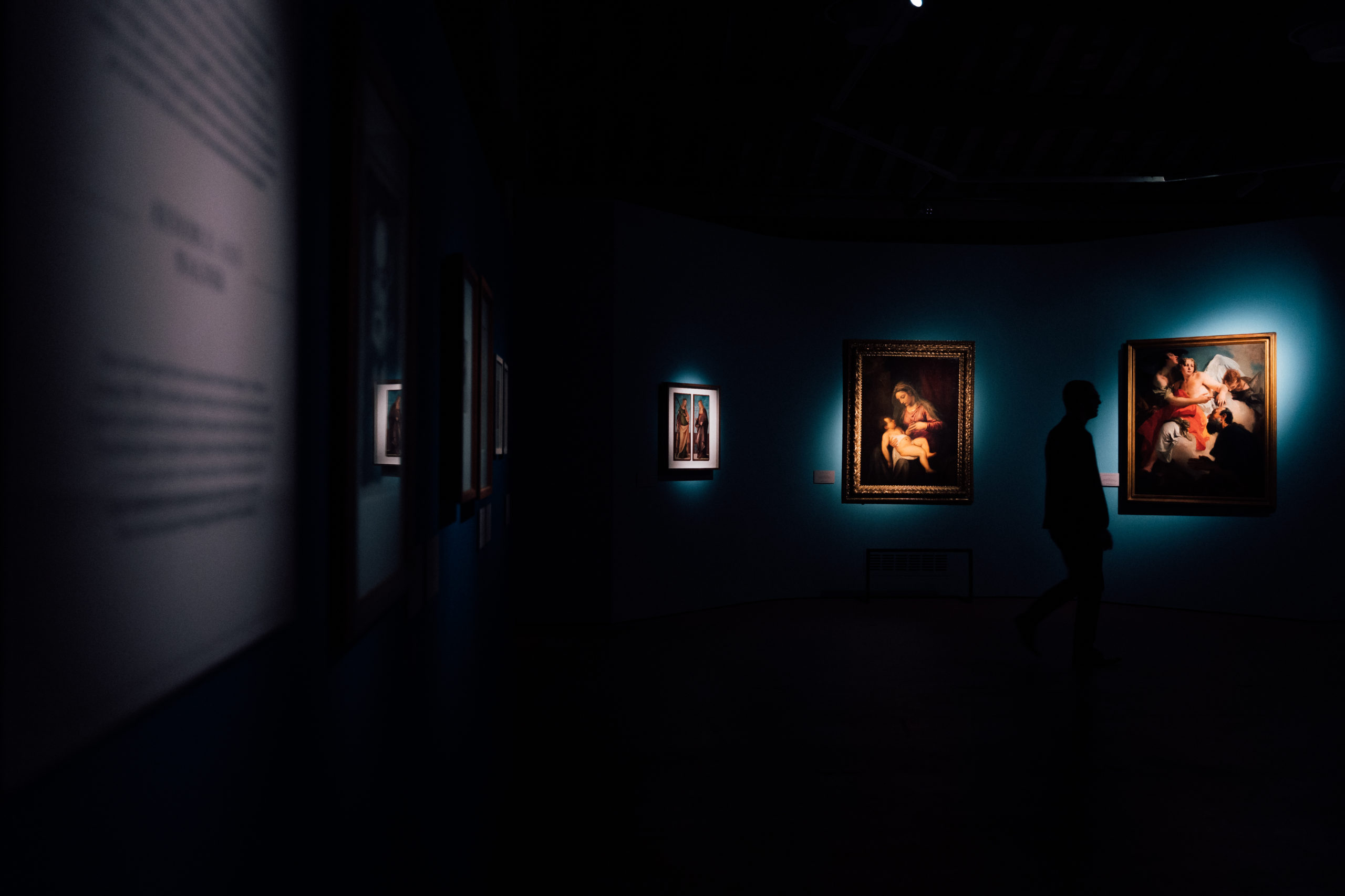
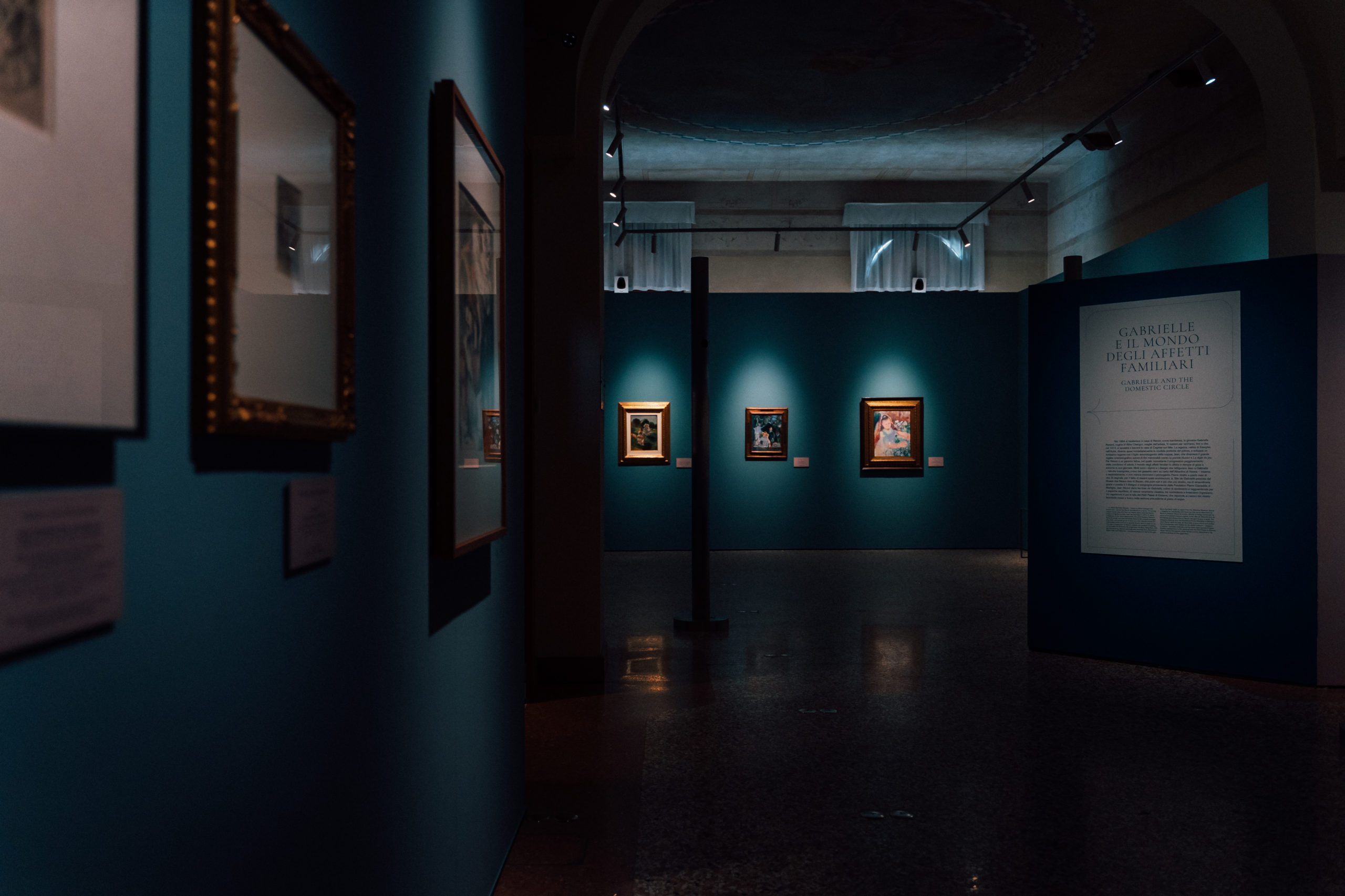
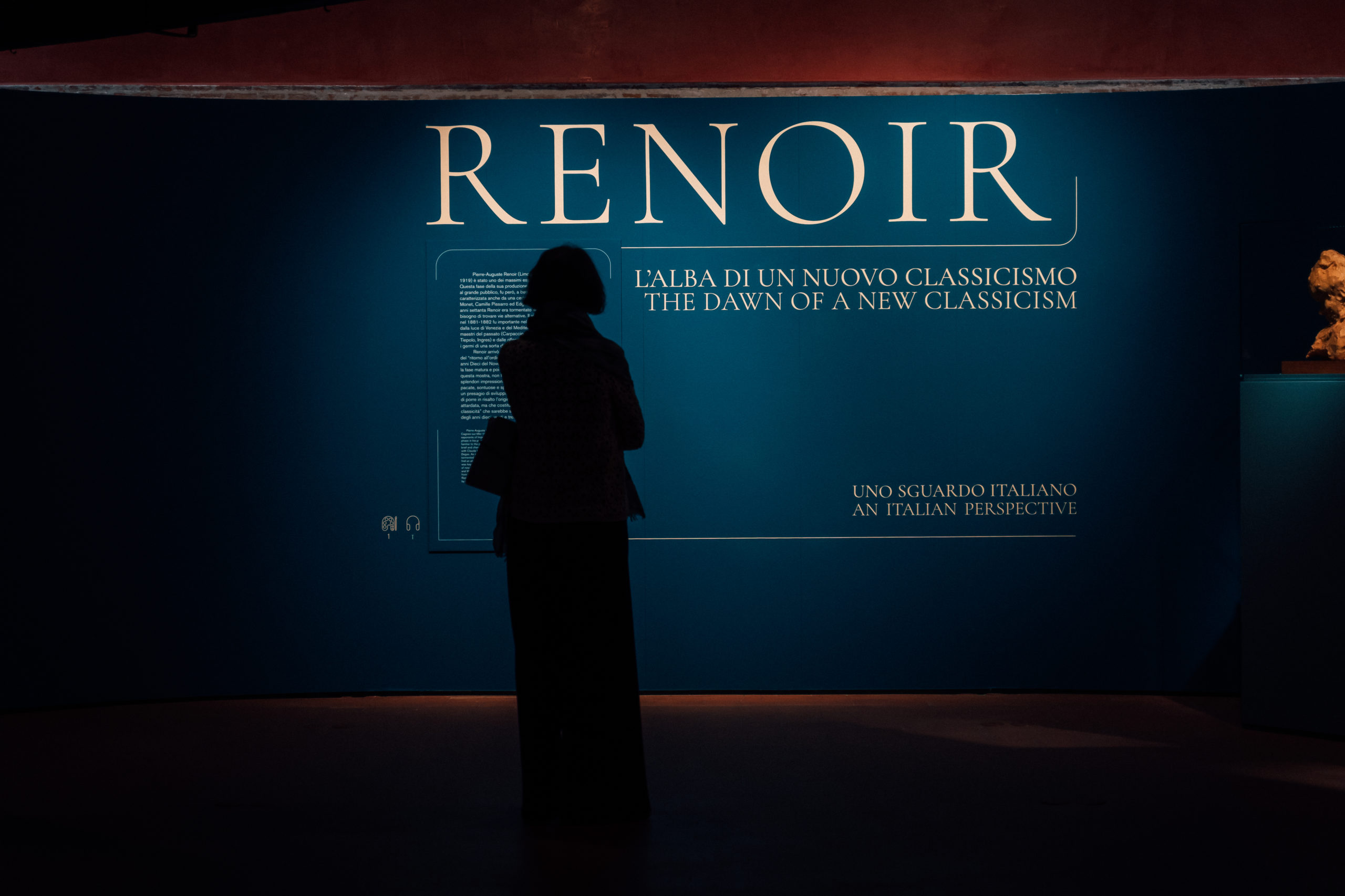
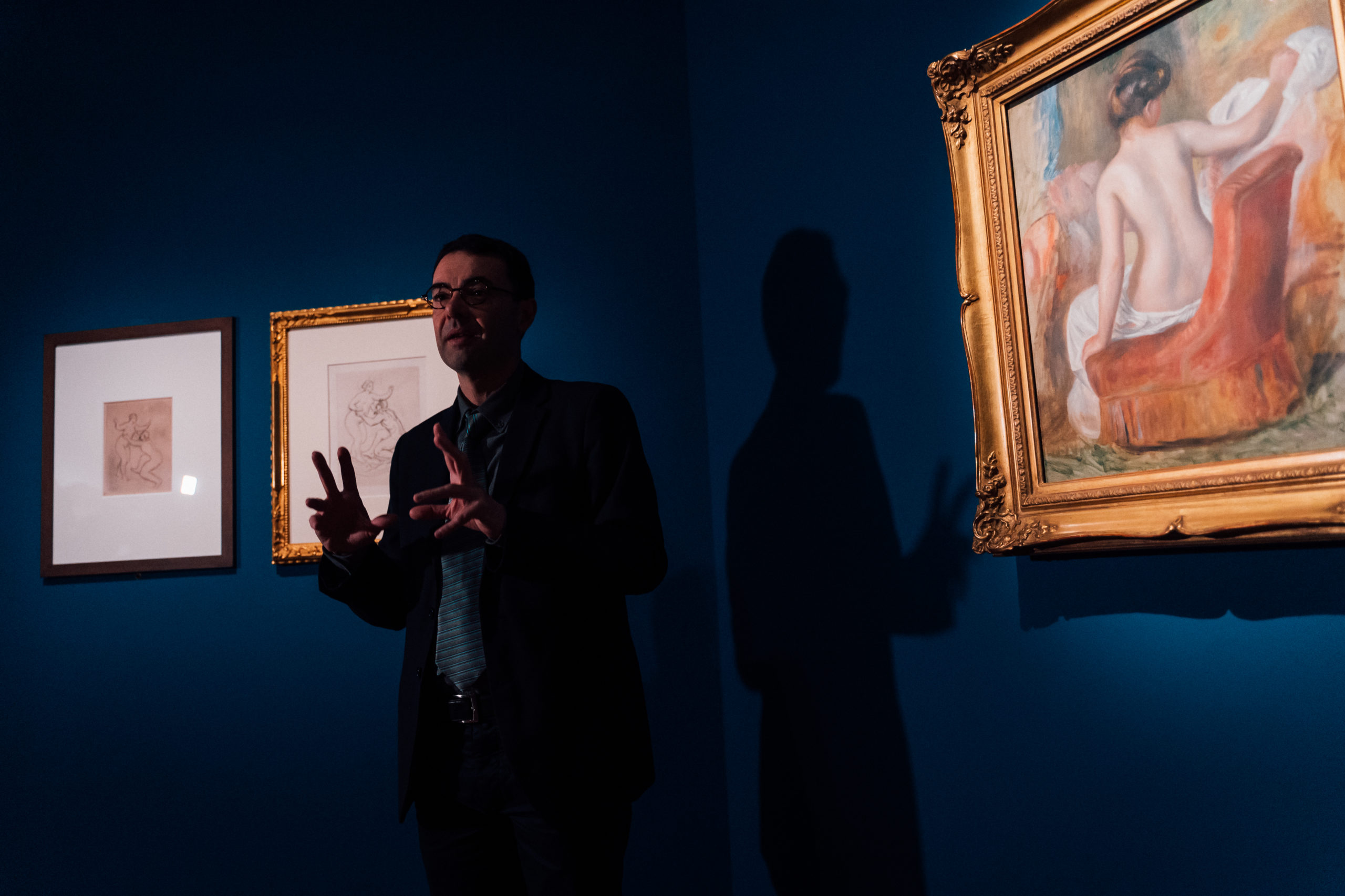
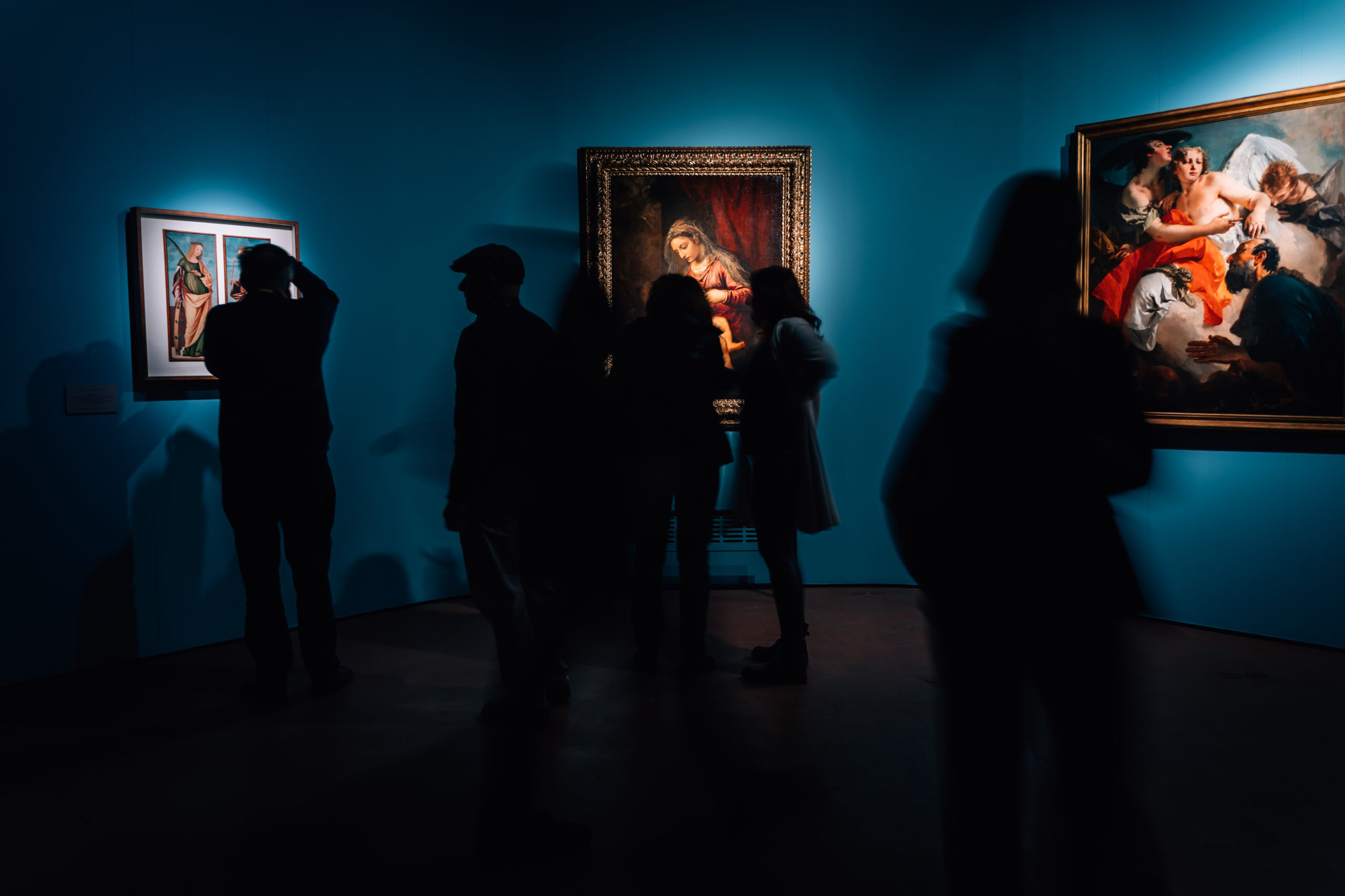
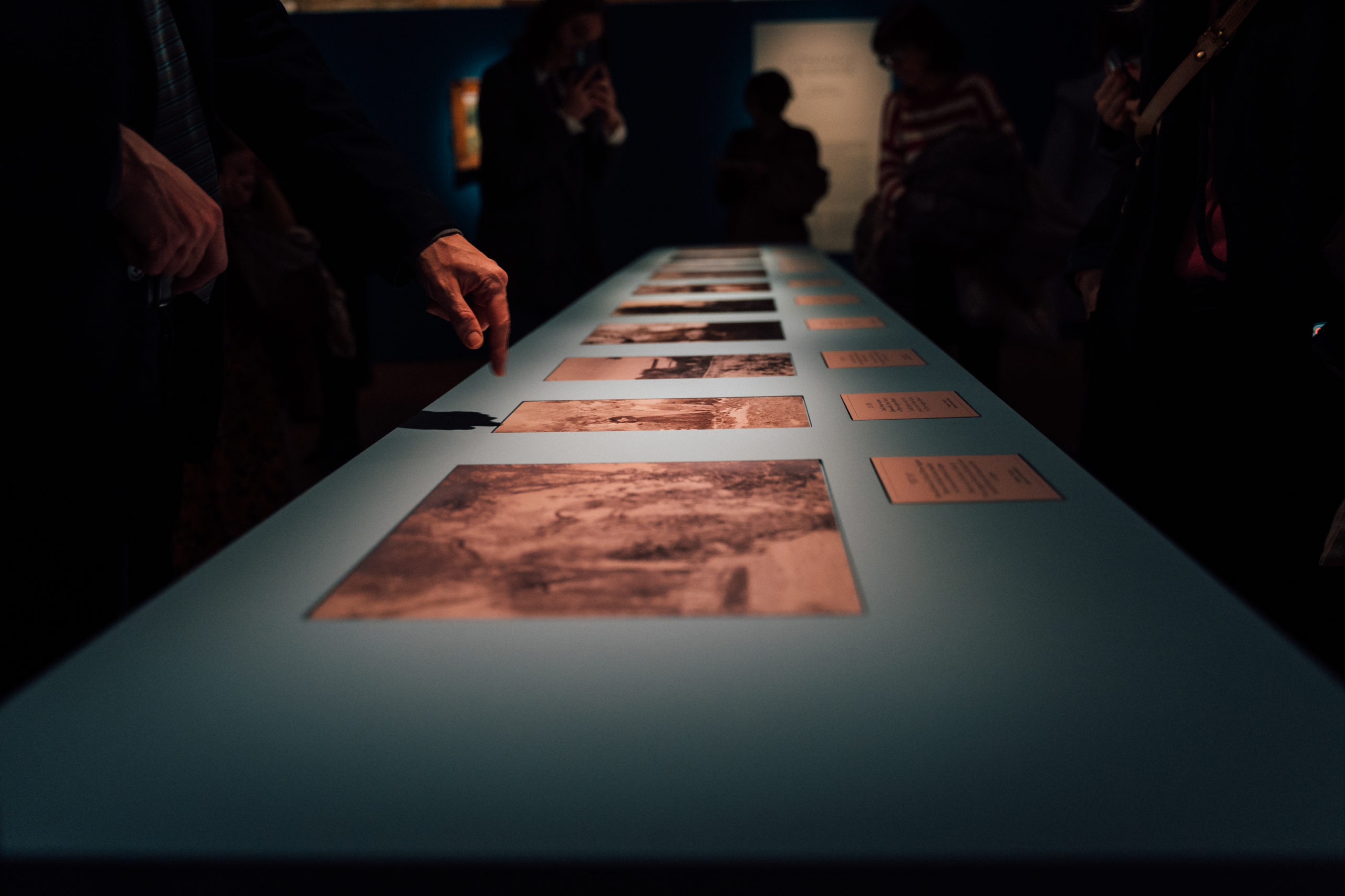
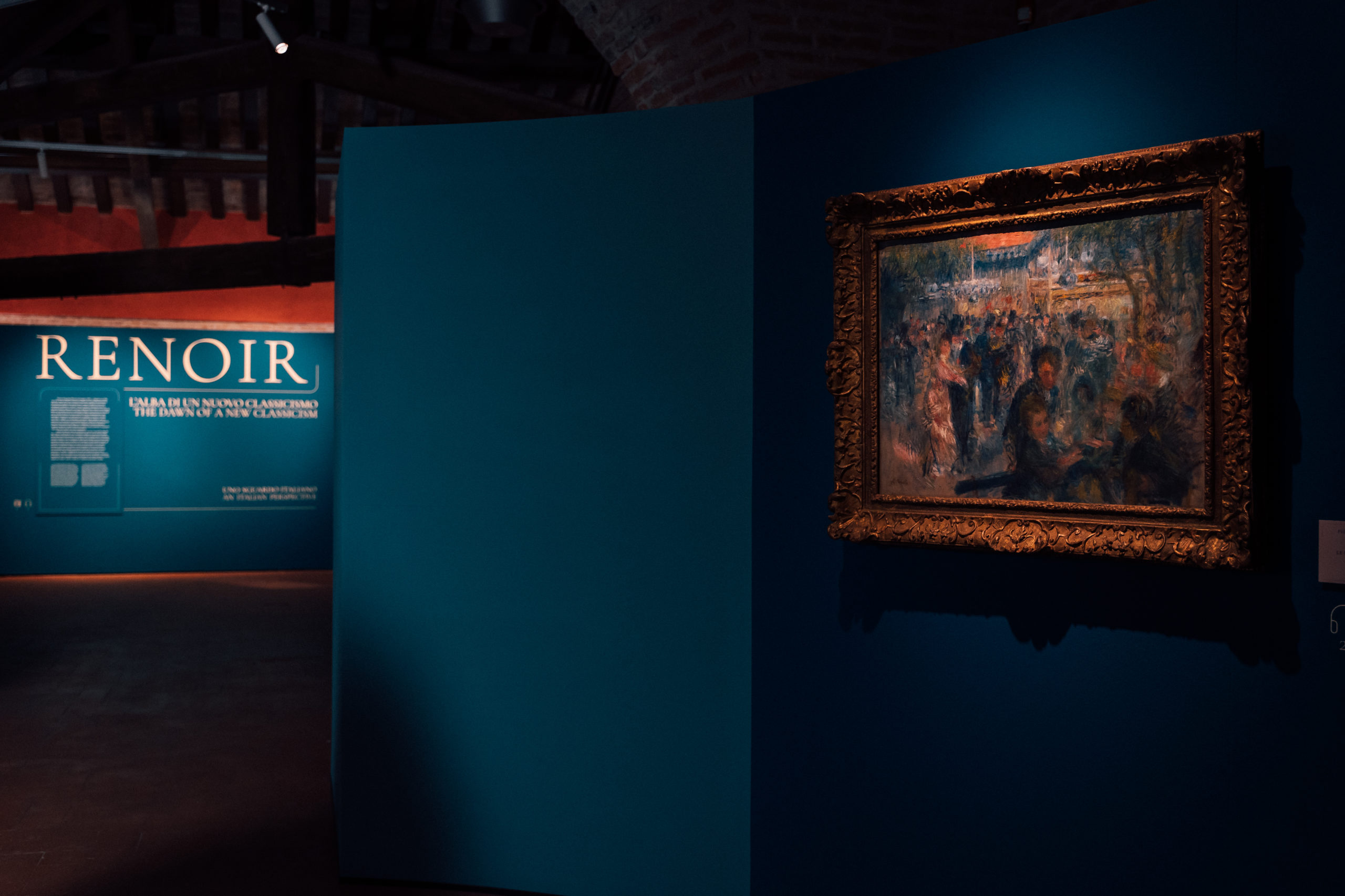
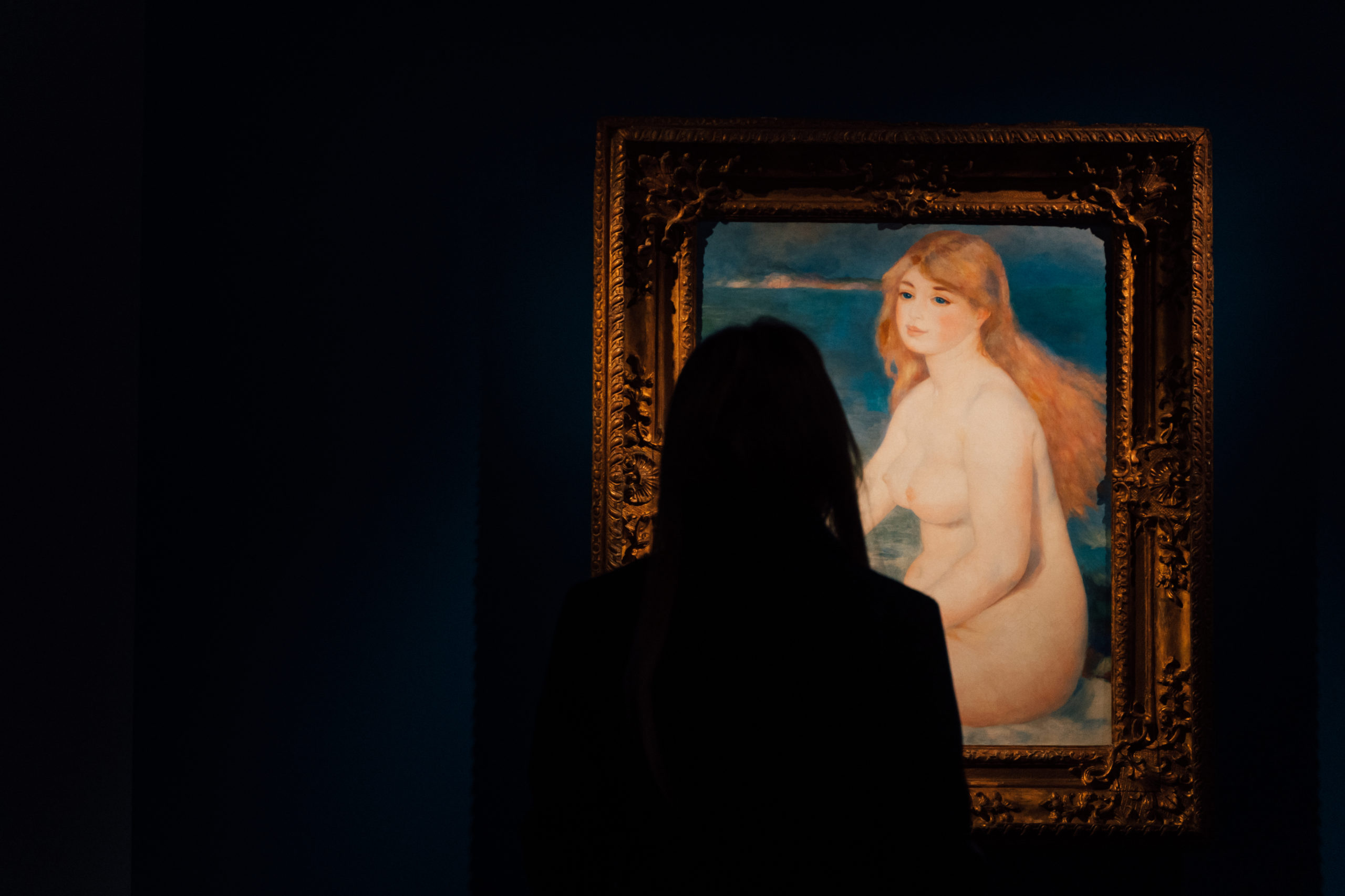
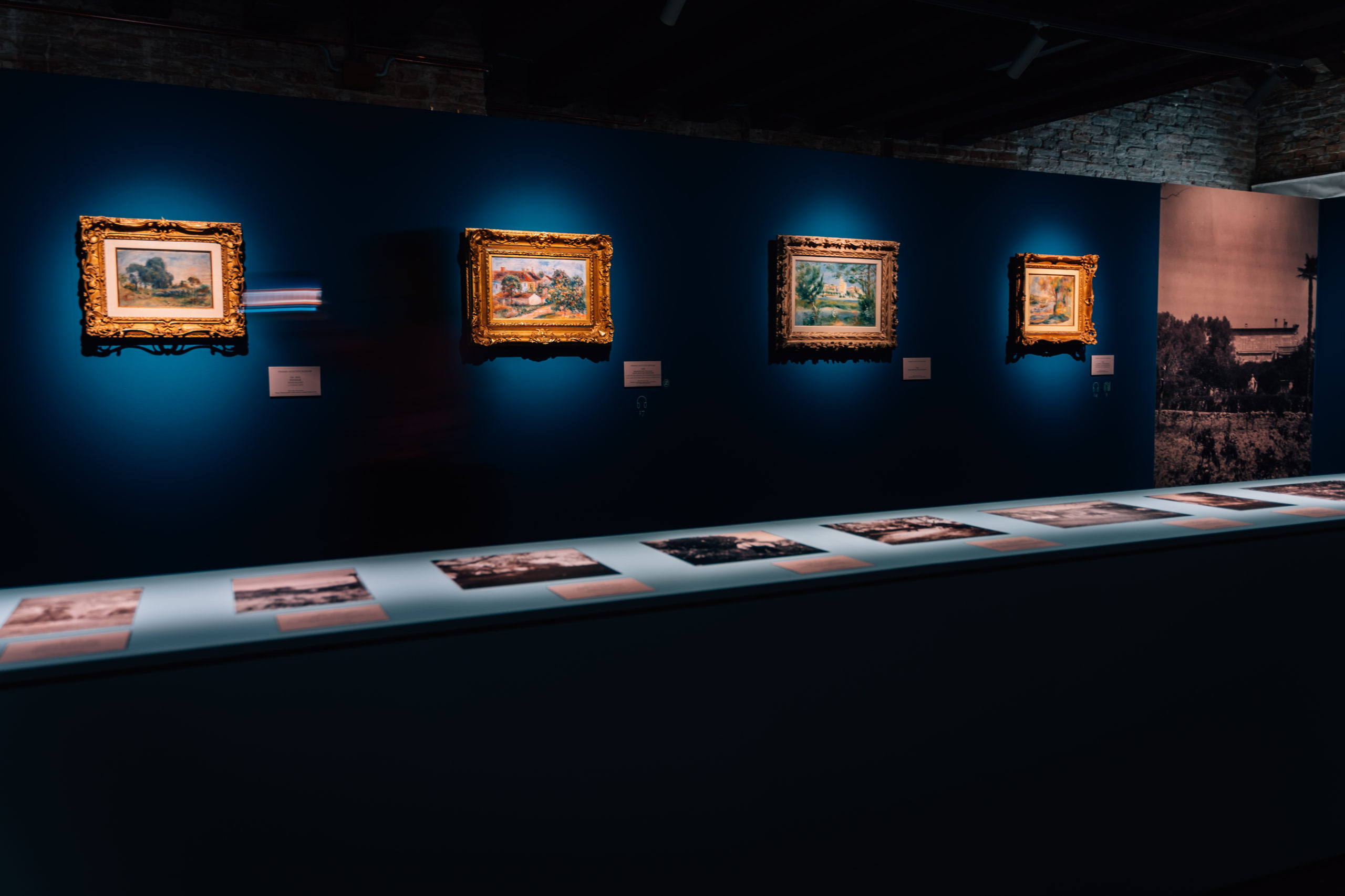
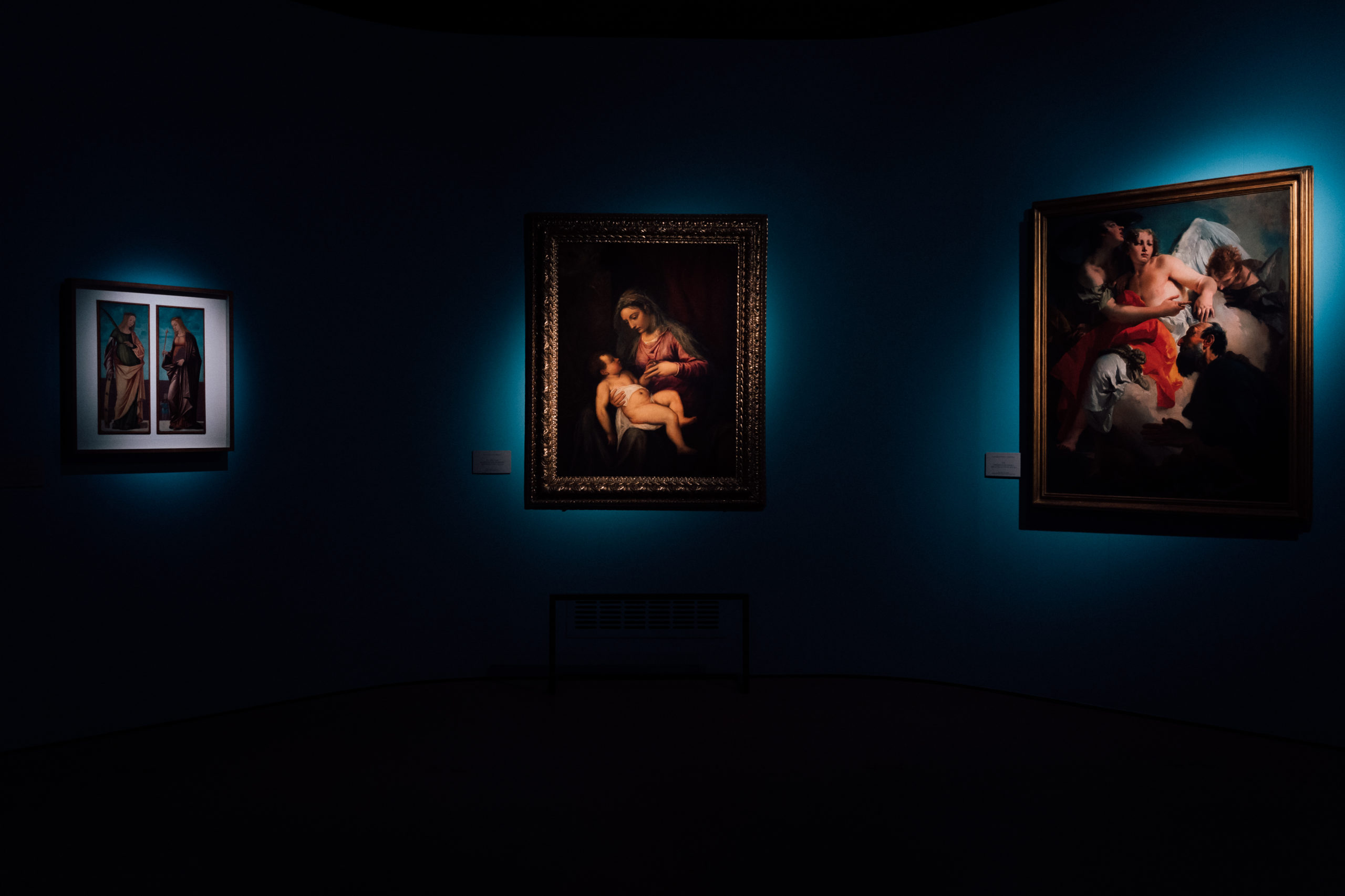





If Degas, the enemy of grace, is the merciless chronicler of dance studios and dressing rooms,
Zandomeneghi, who observes reality with indulgence and faithfulness, is the calm narrator of the bourgeois world.
Enrico Piceni, Zandomeneghi, 1932
Modern life as painting
In the works of Edgar Degas and Federico Zandomeneghi, the narrative of the present replaces any celebratory emphasis. No heroes or great events, but everyday gestures, familiar environments, fragments of time captured in their naturalness: a dance rehearsal, a woman in a café, a silent room crossed by light, the intimacy of a domestic interior. This is where painting finds its most authentic terrain, transforming common experience into vision. Although their approaches differ—Degas’s gaze is more analytical and constructed, while Zandomeneghi’s colors are warmer and more enveloping—both share the same attention to contemporary reality and the human dimension of things. The exhibition accompanies the visitor into this universe of discreet presences, luminous balances, and lived spaces, recreating the atmosphere of an era in which art abandoned the rhetoric of history to focus on everyday life, closely observing bourgeois and urban life, capturing the truth of its gestures and slow pace, and choosing to simply turn it into painting.


Edgar Degas, Study for The Bellelli Family, 1858, Ordrupgaard, Copenhagen. Photo: Anders Sune Berg
Degas‘s educational journey began on July 17, 1856, in Naples, where he was welcomed by the family of his paternal grandfather, Hilaire De Gas. A pupil of Louis Lamothe, Edgar was educated in the precepts of the great Ingres and began copying Italian Renaissance works at the Louvre. The purpose of the trip was to continue his study of ancient Italian art. In July 1857, he moved to Rome, where he joined a group of fellow countrymen studying at the French Academy…

Federico Zandomeneghi, The Red Jacket, 1895, private collection
Degas‘s educational journey began on July 17, 1856, in Naples, where he was welcomed by the family of his paternal grandfather, Hilaire De Gas. A pupil of Louis Lamothe, Edgar was educated in the precepts of the great Ingres and began copying Italian Renaissance works at the Louvre. The purpose of the trip was to continue his study of ancient Italian art. In July 1857, he moved to Rome, where he joined a group of fellow countrymen studying at the French Academy.
If Portrait of Hilaire De Gas painted in Naples (1857) can be considered an early example of this intimate inclination, we can then follow its evolution up to Portrait of the Bellelli Family, and imagine possible affinities or sympathies towards aspects of portraiture surrounding Michelangelo, from the Ingres-like tone of Puccinelli’s Portrait of the Noblewoman Morrocchi to the refined psychological intimacy of the characters depicted in Antonio Ciseri’s large outdoor portrait of the Bianchini family. The synthetic, soft brushwork, made up of large areas of color and subtle chiaroscuro contrasts in Degas’ pastel Bellelli Family, exhibited here for the first time in Italy, appears very close to the sensibility of the nascent Macchiaioli, but the en plein air study of the effects of light and chiaroscuro, which was the aim of the Tuscans, did not interest Degas, whose goal was to achieve a perfect and refined formal language, modeled on the ancient but capable of proposing contemporary content with a modern syntax.

Edgar Degas, Dans un café, 1876, Paris, Musée d’Orsay, Legs Isaac de Camondo, 1911
When he arrived in Paris in June 1874, Zandomeneghi was just under thirty-five years old and was a fully-fledged artist, with a particular skill in figure painting. But the following two years were marked by hesitation: he wrote to Signorini expressing his admiration for painters such as Jules Breton and Carolus-Duran, exponents of Naturalism, towards whom his former companions also seemed to be gravitating; but his sensibility led him towards less conventional, freer forms of painting. Soon the Seine, the woods, and the surroundings of Paris appeared to him in a new light, that emanating from the works exhibited by Pissarro, Guillaumin, Maureau, Monet, Renoir, and Sisley at the Impressionist group exhibitions of 1876 and 1877.
In 1877, the Venetian artist’s name appears in Degas’s correspondence, revealing that the two artists had met and were spending time together.
A true manifesto of the Venetian artist’s conversion to Impressionism, the large painting Le Moulin de la Galette (1878) elaborates with originality certain ideas—the photographic cut of the composition, the almost caricatural expressiveness of the figures, the broken and frozen gestures—that were inspired by Degas’s paintings.
The two artists shared the idea of an art based on the observation of modern life, individual character and social environments, as well as the value of drawing as a cognitive tool. “The pencil will be dipped in the essence of life,” wrote Edmond Duranty, the theorist of Nouvelle peinture. In 1879, Zandomeneghi was invited by Degas to participate in the fourth collective exhibition of the Impressionist group.

Federico Zandomeneghi, Visit in the dressing room, 1886, private collection
During the 1980s, Zandomeneghi’s work was marked by splendid paintings, clearly inspired by his total, highly personal adherence to the French movement: Mère et fille, Place d’Anvers, Il dottore, Le madri, Al caffè Nouvelle Athènes, Visit in the dressing room are some of the works that represent the artist at subsequent exhibitions of the French group. Aligned within the Impressionist movement with the “realist” or ‘dessinateurs’ current led by Degas, Zandomeneghi preferred themes drawn from contemporary urban and domestic reality and gave life to a sort of “modern humanism”, equidistant from the pure values of the major Impressionists and the narrative vein of the Naturalists.
In Place du Tertre Federico depicts the picturesque square located in the Montmartre district, not far from the Sacré-Cœur Basilica and therefore from his own home, a place frequented by artists, musicians, and poets: he captures a fleeting moment, a snapshot of everyday life with a diagonal cut that places us in the midst of a typical day in the bustling city. He returns to his domestic intimacy with Mother and Daughter, which features his mother Teresa and sister Tonina caught in the daily ritual of dressing. The atmosphere of modern Parisian life is captured with particular effectiveness in Al Café and Al caffè Nouvelle Athènes , works that are presented here for the first time together with Degas’s famous Dans un café, in which the French artist portrays an absinthe drinker next to a corpulent male figure whom we recognize as the artist Marcellin Desboutin.
Ma alla visione implacabile e quasi crudele dell’amico che deforma le figure e i loro gesti, si contrappone il naturalismo affettuoso di Zandomeneghi che accentua un’atmosfera di cordiale intimità e ferma le pose con eleganza.
Le tub pone al centro della scena la tinozza in metallo destinata -nelle classi popolari- al bagno e che come tale compare in numerosi dipinti di autori impressionisti: una spessa linea nera di contorno stesa a pennello corre lungo i contorni della figura, accentuandone la bidimensionalità e accogliendo una pittura magra ed essenziale che richiama addirittura il sintetismo di Gauguin.
In Nudo che si asciuga di Zandomeneghi ritroviamo l’affinità con la linea vibrante e indomita di Degas di opere come Donna che esce dal bagno e Donna che si asciuga i capelli: in quest’ultimo carboncino, la struttura compositiva è organizzata intorno al busto obliquo e presenta linee inclinate in diverse direzioni che suggeriscono l’azione della donna che è vista da tergo, come se l’osservatore stesse osservando dal buco di una serratura.

Federico Zandomeneghi, Donna che si asciuga, Charleston, 1895 circa, private collection
1886 was the year of the Impressionists’ last collective exhibition, whose cohesion was beginning to wane. Both Zandomeneghi and Degas exhibited oil and pastel paintings, mostly depicting female nudes and this coincidence is further proof of their similar artistic pursuits. Zandò’s La toilette, La lecture, Le tub, Nudo che si asciuga form a compact whole that highlights his exploration of the female nude, captured in poses that are part of the most ordinary everyday life, as in the similar subjects treated at the same time by Degas. But the relentless and almost cruel vision of his friend, who distorts the figures and their gestures, is contrasted by Zandomeneghi’s affectionate naturalism, which accentuates an atmosphere of cordial intimacy and elegantly freezes the poses.
Le tub places the metal tub used for bathing by the working classes at the center of the scene, which appears as such in numerous paintings by Impressionist artists: a thick black outline drawn with a brush runs along the contours of the figure, accentuating its two-dimensionality and welcoming a lean and essential painting style that even recalls Gauguin’s synthetism.
In Zandomeneghi’s Nudo che si asciuga, we find an affinity with the vibrant and indomitable line of Degas in works such as Woman Coming Out of the Bath and Donna che si asciuga i capelli: in the latter charcoal drawing, the compositional structure is organized around the oblique bust and features lines sloping in different directions that suggest the action of the woman seen from behind, as if the observer were looking through a keyhole.

Edgar Degas, Classe de ballet, 1880 circa, private collection
Visita in camerino di Zandomeneghi represents a rare foray into the world of entertainment and themes favored by his friend Degas, even if his approach to them is completely different. The French artist devoted himself to studying the movements of individual figures, captured with increasingly synthetic strokes and an increasingly casual perspective, preferably from above, as in the beautiful Dancer Adjusting Her Slipper (1885), in which the pastel technique allows for an extraordinary, almost caressing rendering of the effects of light on the white tulle, while the touch of blue, although referring to the concrete and usual presence of an ornamental ribbon, is in reality the trace, the trail of a movement captured by the artist.
After all, Degas is primarily interested in the movement of the dancers, their muscular tension, and the fatigue that often makes those bodies as ungainly as they are real. Despite the similarity of the theme, Zandomeneghi never strays from a formal composure, and in Visita in camerino (Visit to the Dressing Room), with a painting technique using small touches that resolves the the chromatic mixture into tiny bright and shiny fragments, he shows us in the foreground the dancer sitting at the dressing table while conversing and smiling with an admirer whose silhouette is mercilessly trimmed to leave room for the girl who, in her tulle dress, appears like a large white flower streaked with pink tones, due to the cold reflections provided by the artificial light.

Federico Zandomeneghi, Bambina dai capelli rossi, 1895 circa, private collection, Milan
Zandomeneghi was always close to Degas, whether because of their undeniable similar cultural tastes, their genuine friendship, or the undoubted attraction that the great French master exerted on the Venetian, as indeed on all his contemporary artists. Degas, who also counts him among his regulars along with the sculptor Paul-Albert Bartholomé, does not spare him his sarcasm, and when inviting him to pose for a sculptural portrait, he rebukes him with “Zandomeneghi, vous qui n’avez rien à faire…” (“Zandomeneghi, you who have nothing to do…”), hurting his pride. Underlying this was a malicious retaliation against the Italian who had come to rival Degas, as well as Renoir, for the favors of the great art dealer Paul Durand-Ruel. From 1894 onwards, Zandomeneghi was linked to the famous auction house by an exclusive contract. He therefore developed a more peaceful view of the themes and subjects dear to Impressionism, devoting himself above all to research into color, which led him to further enhance the Venetian palette of his origins.
Zandò does not paint goddesses or divas, but rather young women from the Parisian middle class, who keep up with fashion, leaf through magazines, wear trendy clothes, and often meet for tea in the comfortable interiors of their apartments. The painter measures himself against the cynicism of Degas and the sweetness of Renoir to find his own stylistic signature, namely solid forms infused with color, soft contours filled with velvety surfaces and strong colors, rendered mainly in pastel. He thus creates a repertoire of great refinement and elegance, the well-known and beloved signature of his mature work.
Mostra promossa da

In collaborazione con
Main partner

Mostra prodotta da
